
 Delaware Department of Labor

The Delaware Division of Vocational Rehabilitation (DVR) highlights client experiences to inspire others, celebrate achievements, and educate the public about VR services. If you or someone you know would like to share their experience, please complete the linked form below and let us know if you are willing to be contacted about sharing your VR story.
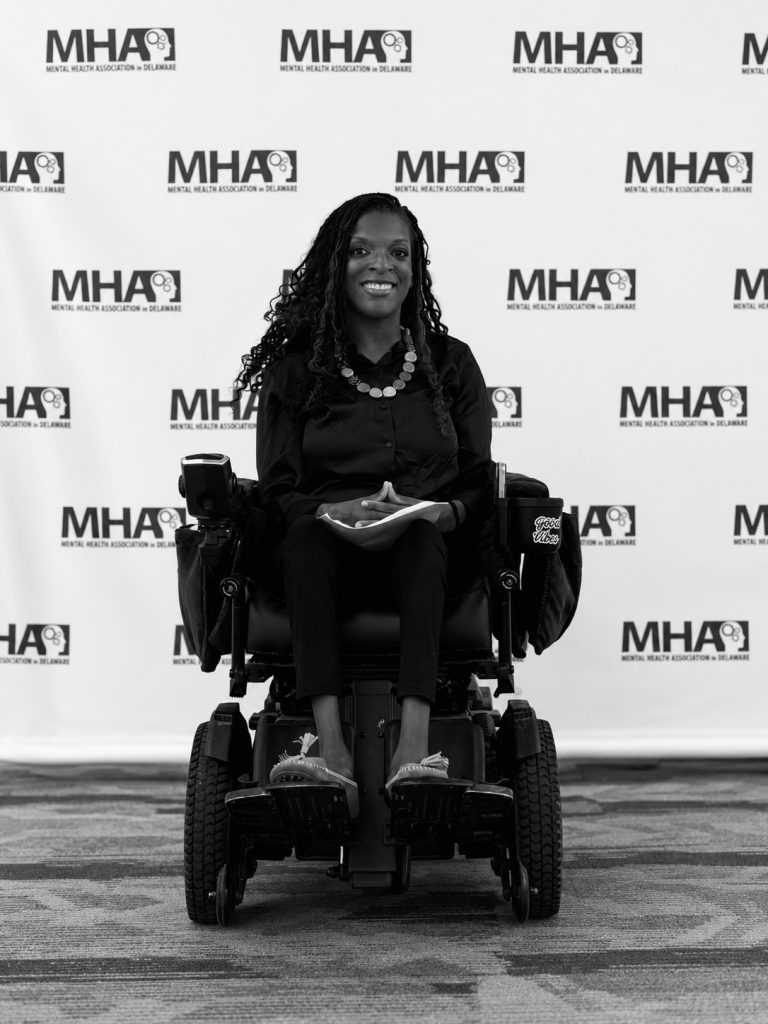
Peer Educator, Mental Health Association in Delaware
“Where we start does not have to determine where we finish.”
My name is Golda Duncan, and I have been a Peer Educator at the Mental Health Association in Delaware for the past four years. Today, I want to share my story—not because I believe my journey has been perfect, but because I believe our stories have the power to remind us that where we start does not have to determine where we finish.
I am a Black lesbian woman living with a physical disability and several mental health conditions, including anxiety, OCD, and body dysmorphia. Each part of my identity carries its own history—its own challenges, its own pain—but also its own strength. Learning how to move forward has meant learning how to carry all of those parts of myself with me, rather than feeling like I have to leave pieces of myself behind.
I was born on October 28, 1994, to a mother who struggled with substance use and depression. She continued using substances during her pregnancy, and I was born with an addiction. My early experiences played a significant role in the development of my cerebral palsy.
For those who may not be familiar with cerebral palsy, it is a group of conditions that affect movement, balance, coordination, and other functions because of damage to the developing brain. I have spastic triplegia cerebral palsy, which affects my speech, both of my legs, and one of my arms.
One of the most important parts of my journey toward independence, employment, and building a career was working with the Delaware Division of Rehabilitation, or DVR.
For me, DVR was more than just a program that helped me find employment. DVR became part of my journey toward understanding what was possible for my life.
Sometimes, when you grow up being told what you cannot do, it becomes difficult to imagine what you can do. I had to learn that my disability did not mean that I couldn’t have goals, build a career, contribute to my community, or live an independent life.
DVR helped me begin looking at my future differently. Through the support and guidance I received, I was able to focus on my strengths, my interests, my abilities, and my employment goals. I had the opportunity to think about what kind of career would be meaningful to me and how I could turn my interests and lived experiences into something purposeful.
That support helped me take steps toward a career in the mental health field and ultimately toward the work I do today.
Today, I have a career that allows me to use my lived experience to help other people. And that is something I do not take for granted.
“DVR did not choose my career for me. Instead, DVR helped provide me with support, resources, guidance, and opportunities that allowed me to make decisions about my own future.”
I want to be clear about something: DVR did not choose my career for me. Instead, DVR helped provide me with support, resources, guidance, and opportunities that allowed me to make decisions about my own future.
That distinction is important.
People with disabilities deserve the opportunity to make decisions about their own lives. We deserve opportunities to work. We deserve opportunities to learn. We deserve opportunities to lead. We deserve opportunities to discover our strengths. And we deserve support that helps us reach the goals we choose for ourselves.
For me, DVR was part of that support system. They helped me recognize that employment wasn’t just about getting a job. It could be about finding purpose, independence, confidence, and a sense of belonging.
My career has given me an opportunity to contribute to my community and to advocate for others. It has also allowed me to take some of the experiences that once made me feel different and use them to connect with people who may be going through their own struggles.
My work as a Peer Educator allows me to say: “I’ve been there too.”
Sometimes, hearing those words from someone who truly understands can make all the difference.
My lived experience has become part of my purpose. The things I once thought made me different have become some of the things that allow me to connect with others.
And that is one of the biggest lessons I have learned on my journey:
“Sometimes the things we think are our weaknesses can become part of our greatest strengths.”
Today, I am proud of the career I have built. I am proud of the independence I have achieved. And I am grateful for the people and resources that helped me along the way.
DVR played an important role in helping me move from asking, “What can I do?” to confidently saying, “Let me show you what I can do.”
That journey has not always been easy. But it has been worth it.
And I am still moving forward.
DVR Partner Program -Registered Apprenticeship
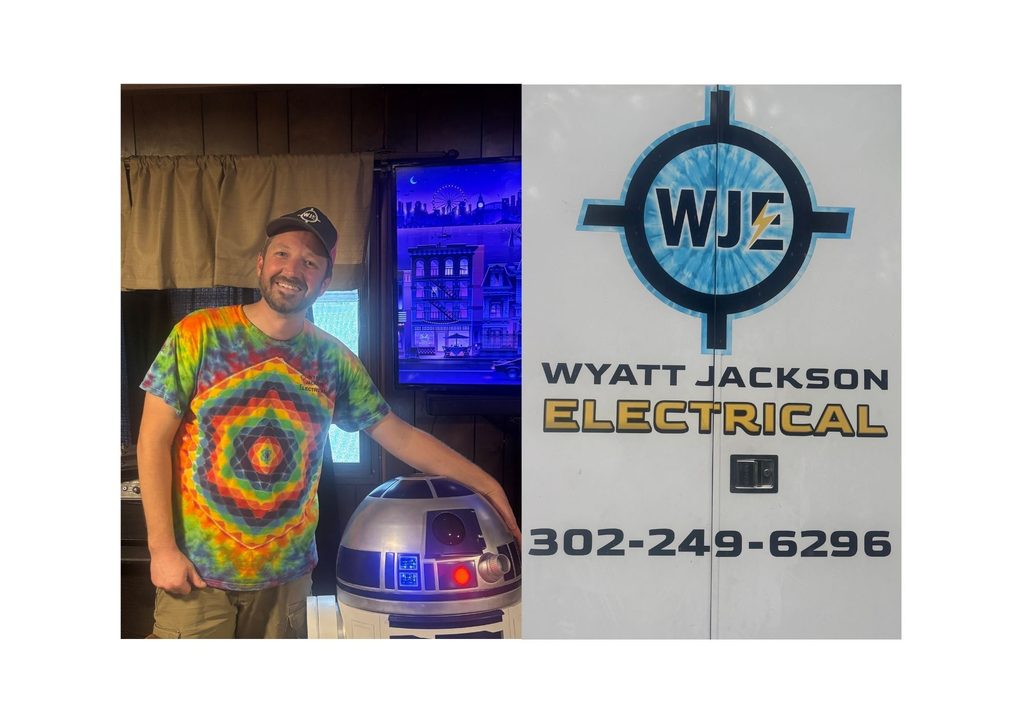
“By my senior year in college I was juggling a full-time course load of 400-level chemistry and biology courses. I was working 50–60 hours a week as a tutor and Chinese food delivery driver, and I was living out of the back of my 1991 Isuzu.”
Despite his financial struggles, Jackson graduated magna cum laude, served as the president and founder of an on-campus organization, and earned his degree. Then, in 2011, at just 21 years old, Jackson graduated college and entered a job market that was short on opportunity. In 2012, Jackson—who jokingly referred to himself as “the world’s most highly educated delivery driver”—was offered a position with Apple Electric. It was there that he was introduced to the opportunities available through apprenticeship—a decision that would change the course of his career.
“They [Apple Electric, a Registered Apprenticeship partner] enrolled me in Sussex Tech’s apprenticeship training program and paid for it,” Jackson said. “When I first walked through the doors of Sussex Tech High School fourteen years ago, I barely knew how to reset a tripped breaker. They paid me for my on-the-job training for the four years while I worked toward my Journeyman’s license. I was never homeless during my training to become the skilled technician that I am today, and in fact managed to pay off my extraordinary student loan debt working as a tradesman.”
Through his Registered Apprenticeship, Jackson earned a paycheck while learning the trade, gained valuable hands-on experience, and achieved his Journeyman’s license. Registered Apprenticeship not only provided him with a career, but it also gave him financial stability and a pathway to long-term success. After completing his apprenticeship, Jackson returned to Sussex Tech as an apprenticeship instructor before earning his Master Electrician license. He later founded Wyatt Jackson Electrical, where he now sits on the other side of the table, creating apprenticeship opportunities for others looking to build rewarding careers in the skilled trades.
“Since I’ve started my business, I have found a new freedom and independence that I had never known before in my life. I know a level of financial security I never could have imagined as a homeless college student. Wyatt Jackson Electrical is a symbol of leadership, excellence, and the immense opportunity available to people through apprenticeship.”
Wyatt’s story is a powerful reminder that there are many pathways to success. Registered Apprenticeship combines paid on-the-job training with classroom instruction, giving individuals the opportunity to earn while they learn, develop in-demand skills, and build lasting careers. For Wyatt, Registered Apprenticeship didn’t just lead to a job—it opened the door to a future he never imagined.
Find out if a Registered Apprenticeship can change the course of your life. Visit our DOL Apprenticeship page and find an opportunity for you!
*The contents of this web page were developed under a grant from the U.S. Department of Education. The Department does not mandate or prescribe practices, models, or other activities described or discussed in this document. The contents of this web page may contain examples of, adaptations of, and links to resources created and maintained by another public or private organization. The Department does not control or guarantee the accuracy, relevance, timeliness, or completeness of this outside information. The content of this web page does not necessarily represent the policy of the Department. This publication is not intended to represent the views or policy of, or be an endorsement of any views expressed or materials provided by, any Federal agency.